Mentoring & Outreach
I have mentored several undergraduate students, with a consistent focus on teaching Python and building their confidence in scientific research. My mentoring philosophy emphasizes developing independence, confidence, and scientific efficacy. For example, Logan Conrad published a research note (Conrad et al. 2025) investigating contamination from the HST point spread function in sky background measurements. Megan Miller has been instrumental in exploring the limitations of current zodiacal light models and is now leading a paper on extragalactic background light measurements using SKYSURF models. Tejovrash Acharya converted our SKYSURF zodiacal light model from IDL to Python, making it more accessible for future use. Brenden Brinkman and I collaborated to compare various sky measurement algorithms.
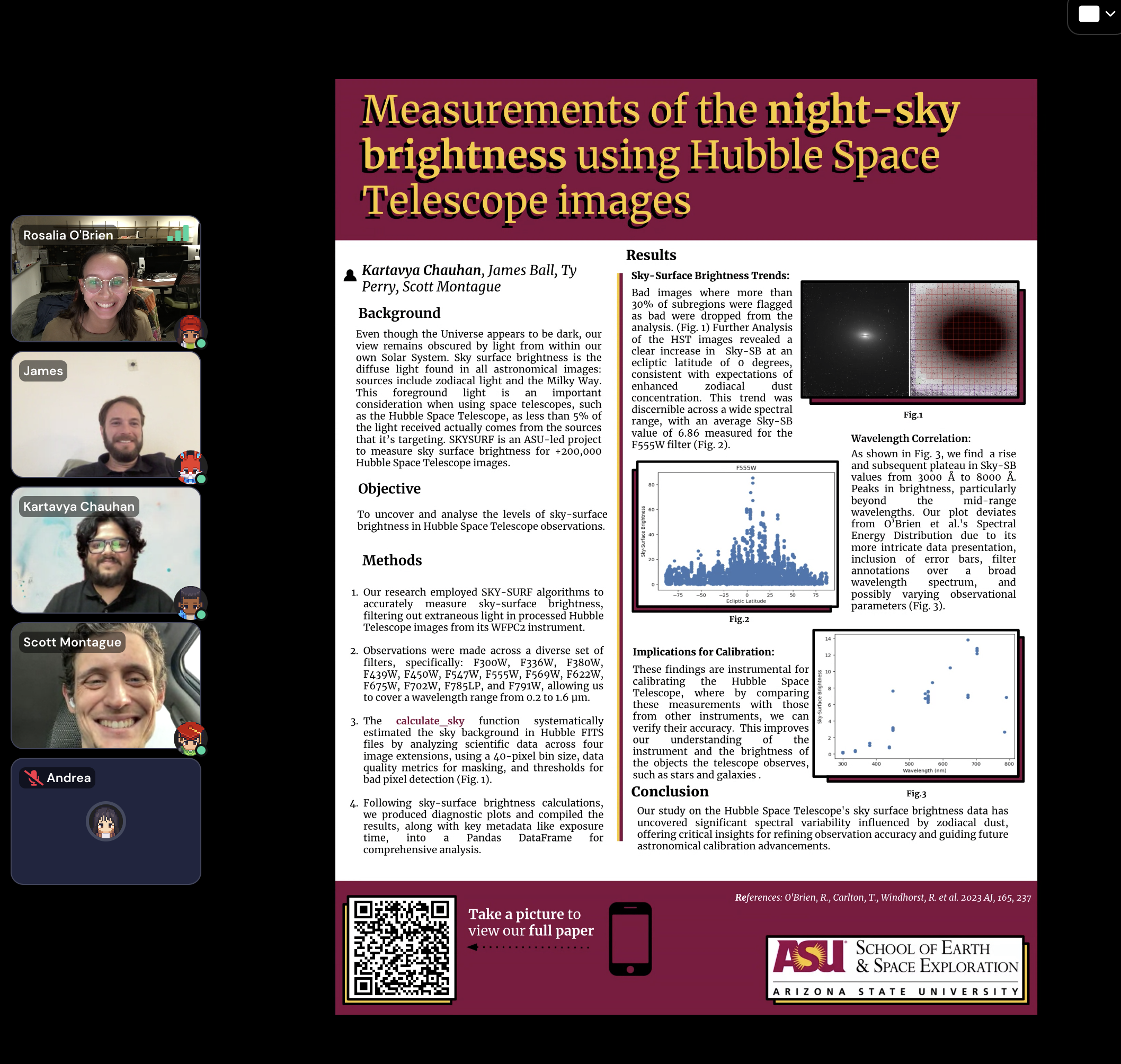
In the spring of 2025, I was a teaching assistant for an Introduction to Astronomy class at ASU, which catered to non-scientists. I also volunteered to lead a research-based course for online undergraduates, guiding them through the SKYSURF sky measurement pipeline. The students successfully measured sky surface brightness in over 50,000 HST WFPC2 images. I am working with undergraduate Hal Ingram to complete this project, where he is now working on a follow-up research note.
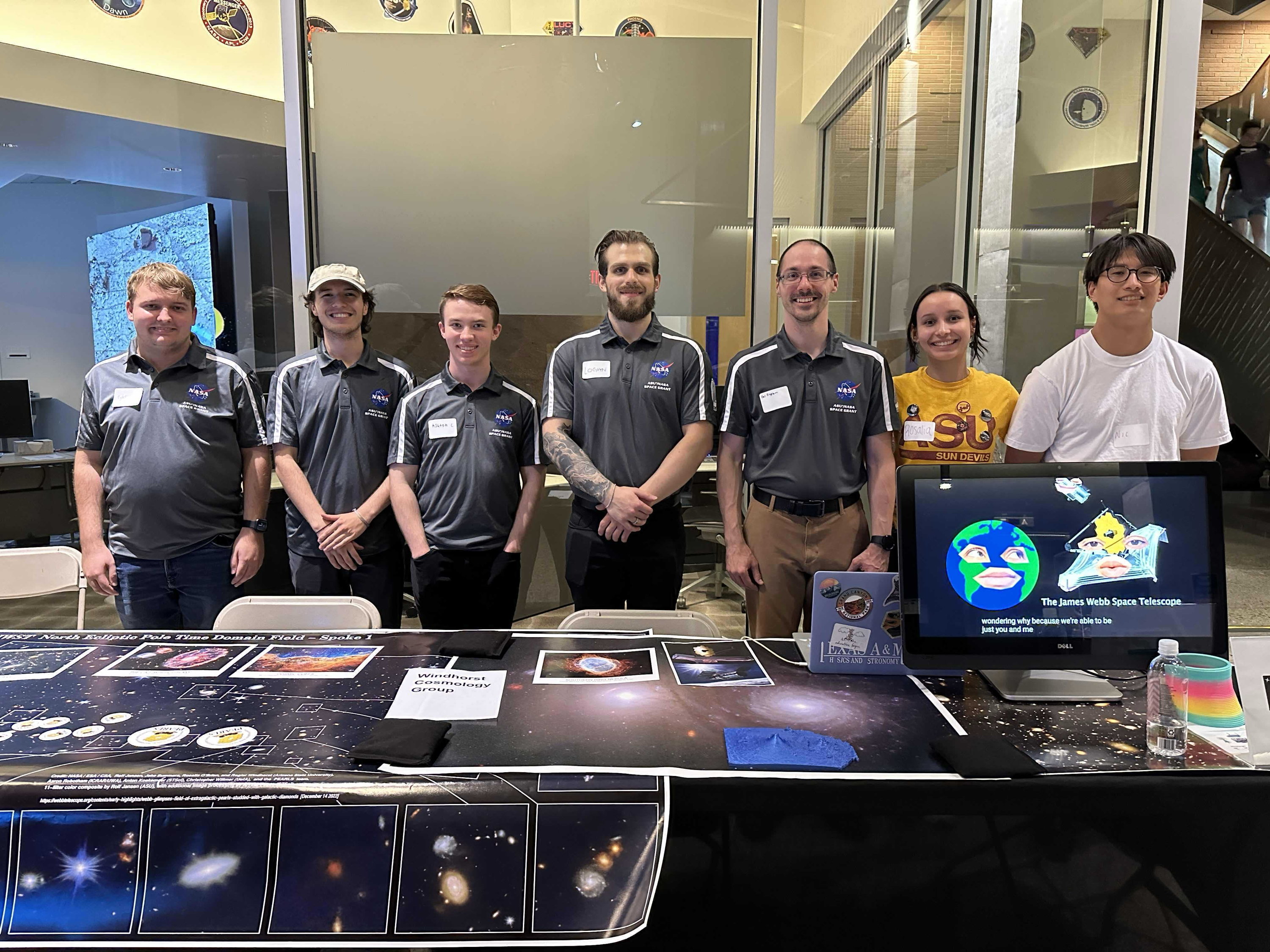
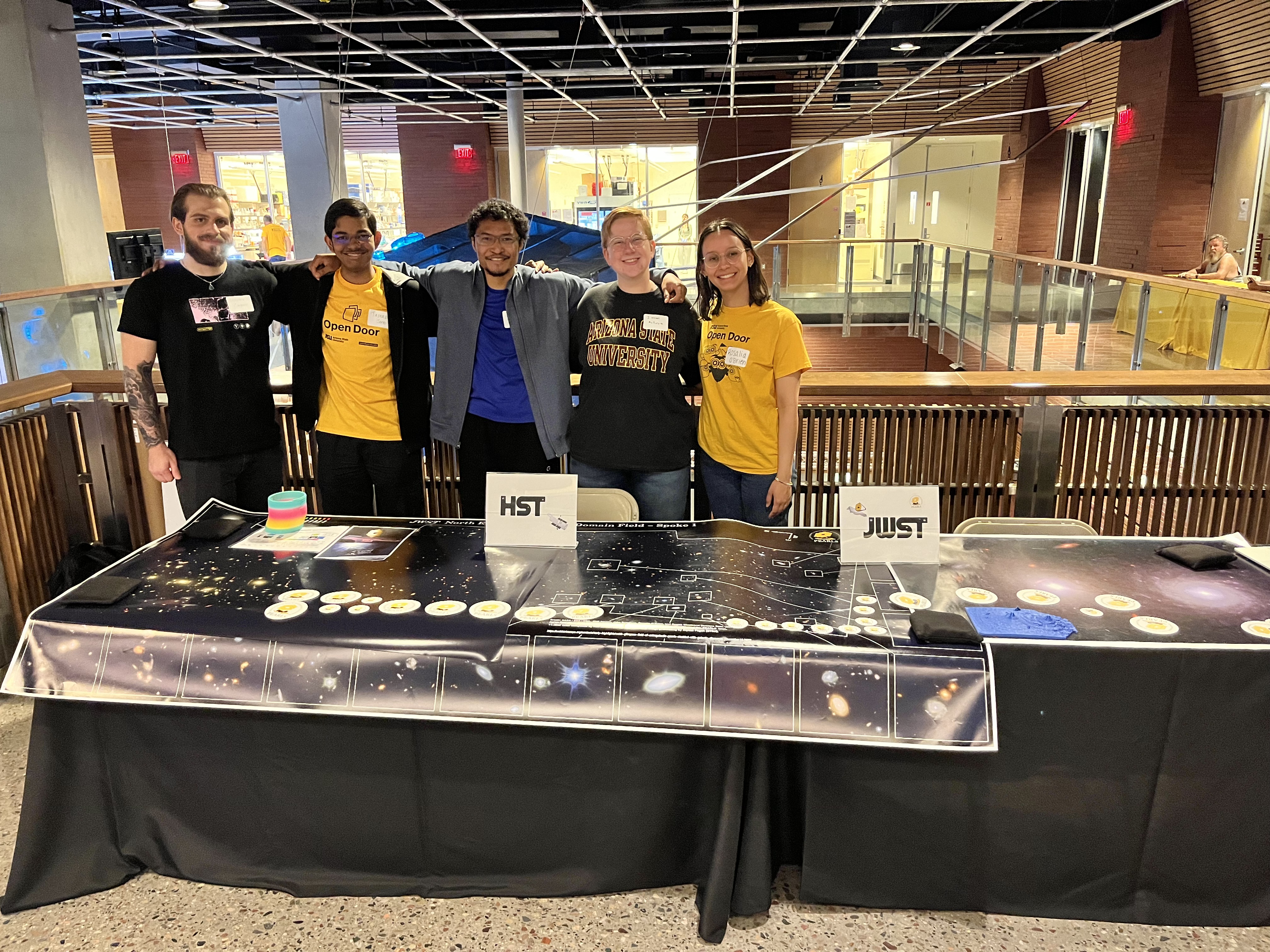
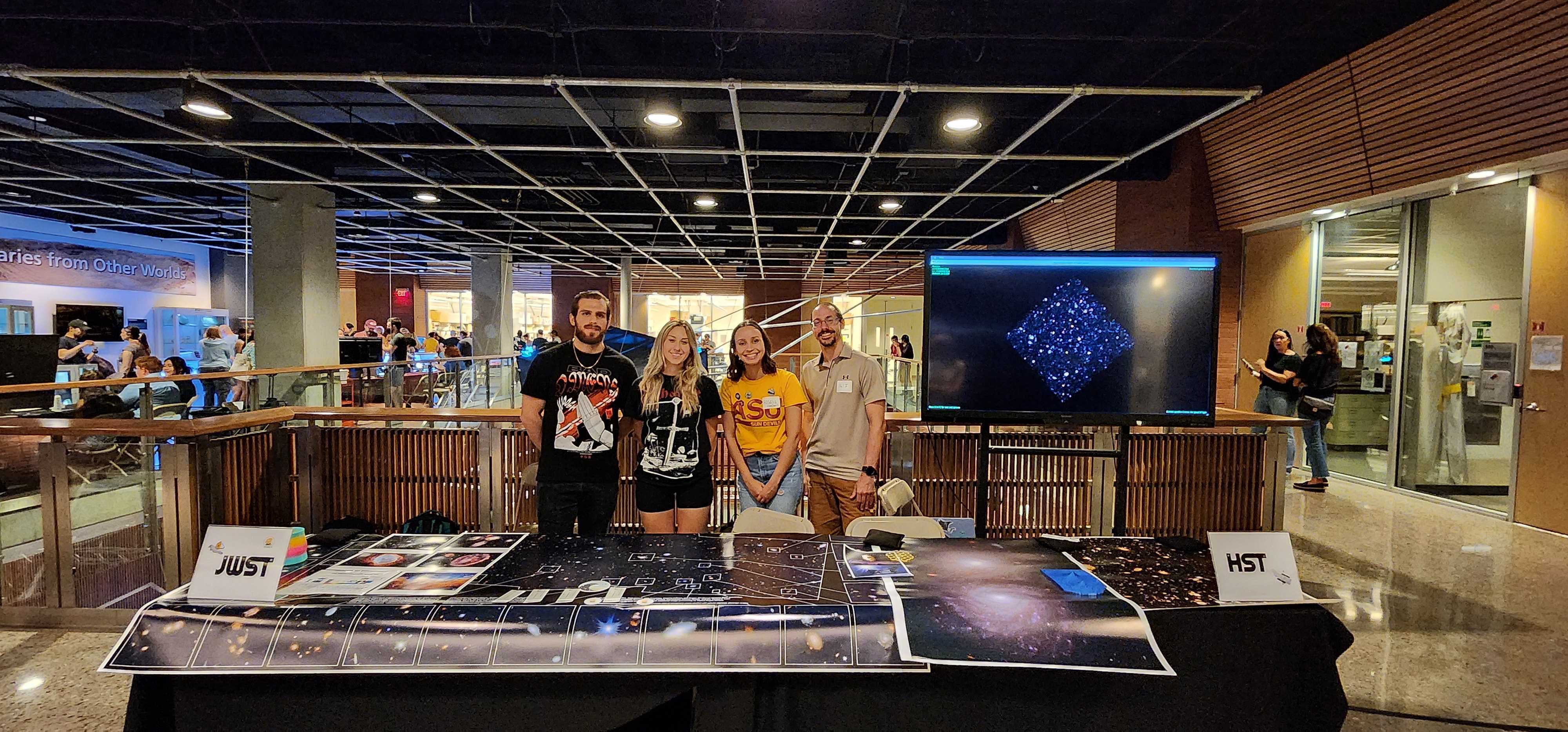
In addition, I helped revitalize my research group's outreach efforts at ASU, particularly after the launch of JWST. Building on the foundation laid by former undergraduate Liam Nolan (who created Hubble-based outreach materials), I expanded our exhibits to include combined HST and JWST imagery. Our booth featured engaging visuals, including a 3D-printed model of interacting galaxies (VV191), large HST and JWST posters, stickers, a HST+JWST themed video, and aHaH, a Java-based learning aid that lets users explore the Hubble Ultra Deep Field in 3D space. I led the organization of outreach events approximately twice per year.